

Pelvic Health Physiotherapy in Suffolk
Specialist support for women and men – helping you regain strength, confidence and control.
Pelvic health challenges can affect daily life in ways that feel frustrating, isolating or even embarrassing. Whether your symptoms began after childbirth, surgery, illness, menopause, prostate treatment or simply developed over time. At wellbeing that works you’re not alone and you don’t have to manage them on your own.
We provide specialist pelvic health and pelvic floor physiotherapy from our clinics in Ipswich and Eye, helping people across Suffolk with bladder leakage, bowel dysfunction, pelvic floor problems, pelvic pain and post-surgical recovery. With over 15 years of clinical experience, our expert pelvic health physiotherapists offer compassionate, specialist care, supporting you to move more comfortably, feel more confident, and take control of your wellbeing.
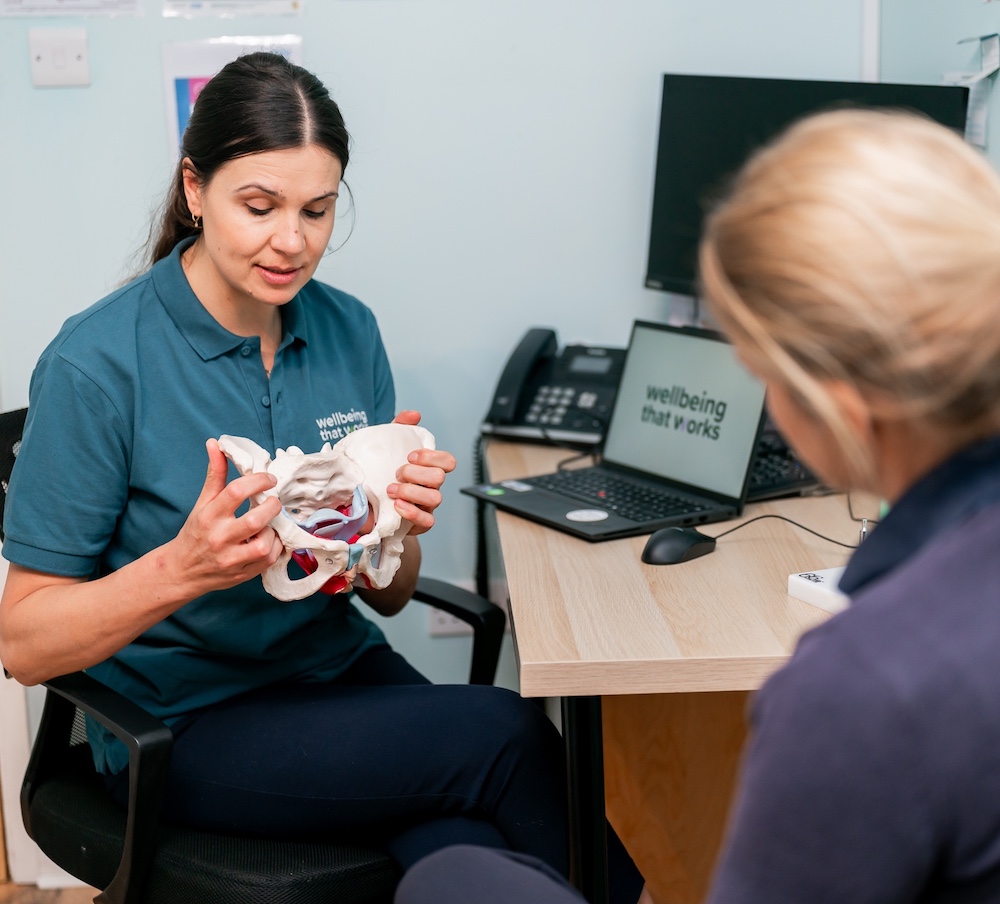
Pelvic Health Through Every Stage of Life
Pelvic health concerns can affect anyone and may occur at different stages of life. Physiotherapy can provide assessment, education and personalised treatment for women during pregnancy, after childbirth, throughout peri-menopause and post-menopause, and following gynaecological procedures.
Many symptoms, including bladder leaks, pelvic pressure, prolapse symptoms and pelvic discomfort, can improve significantly with appropriate treatment and guidance.
Who Can Benefit from Pelvic Floor Physiotherapy?
Our Pelvic Health Physiotherapy and Pelvic Floor Physiotherapy service in Suffolk, with clinics in Ipswich and Eye, is designed for anyone experiencing bladder leakage, urinary incontinence, urinary urgency, frequent urination, bowel dysfunction, constipation, pelvic organ prolapse, pelvic pain, pain during sex, pelvic floor weakness, pregnancy-related discomfort, postnatal recovery concerns, menopause-related pelvic health changes, or symptoms following prostate or pelvic surgery.
Our specialist pelvic floor physiotherapists help women and men across Suffolk with a wide range of pelvic floor concerns. Whether you’re experiencing bladder leakage, prolapse symptoms, pelvic pain, bowel problems, postnatal recovery challenges or issues after prostate surgery, we can provide a comprehensive pelvic floor assessment and personalised treatment plan.
This includes:
Women experiencing:
- Bladder leakage, urgency or frequency
- Bowel control difficulties or constipation
- Pelvic organ prolapse symptoms (heaviness, dragging)
- Pregnancy related discomfort or mobility challenges
- Postnatal recovery needs, including pelvic floor strengthening
- Menopause or perimenopause related pelvic changes
- Pain during sex or vaginal discomfort
Men experiencing:
- Leakage, urgency or changes after prostate or pelvic surgery
- Pelvic pain or discomfort
- Pain affecting sexual function
- Post‑prostatectomy weakness or continence changes
Anyone with:
- Chronic pelvic pain
- Difficulty with daily activities due to pelvic tension or weakness
- Concerns they’ve “put up with” for months or years
If you’re unsure whether pelvic health physiotherapy is right for you – it likely is. Most people with pelvic symptoms benefit significantly from specialist assessment and tailored treatment.
Common symptoms & conditions we treat
Bladder symptoms
- Leakage when coughing, laughing or exercising
- Urgency (rushing to the toilet)
- Frequency (going very often)
- Difficulty fully emptying the bladder
Bowel symptoms
- Constipation
- Leakage or smearing
- Difficulty emptying
- Straining or incomplete emptying
Pelvic organ prolapse
- Heaviness, dragging or “something’s not right” sensations
Pelvic pain
- Pain during sex
- Pain in the lower abdomen, back, hips or pelvic floor
- Post‑surgical pelvic pain
- Vaginismus, dyspareunia, vulvodynia
Pregnancy & postnatal recovery
- Pelvic girdle pain
- Difficulty climbing stairs, moving, getting out of a car
- Pelvic floor weakness
- Core weakness or diastasis recti
- Full Mummy MOT® assessments (read more)
Men’s pelvic health
- Post‑prostatectomy continence issues
- Pelvic pain
- Erectile discomfort or painful ejaculation
General pelvic floor dysfunction
- Tightness causing pain or difficulty relaxing
- Weakness causing symptoms or reduced control
What happens during treatment
Your pelvic health physiotherapist will guide you through a calm, private and supportive assessment process. You will always be in control of what happens, and everything will be explained clearly.
- Understanding your story
We begin with a confidential conversation about your symptoms, daily challenges, goals and medical history. We listen carefully so your treatment reflects what truly matters to you.
- Patient led physical assessment
With your consent, this may include:
- Pelvic floor muscle assessment
- Abdominal and core muscle evaluation
- Breathing and posture patterns
- Movements that relate to your symptoms
- (If appropriate) internal pelvic floor assessment
Internal assessment is always optional, you can discuss alternatives if you prefer.
- Personalised treatment plan
You’ll receive a clear plan outlining:
- Targeted pelvic floor exercises
- Relaxation or down training techniques (if muscles are tight rather than weak)
- Bladder or bowel habit retraining
- Core and functional strengthening
- Strategies for managing symptoms in daily life
- Guidance on equipment that may support progress (e.g., biofeedback, dilators, pelvic wand)
- Ongoing support and review
Follow up sessions track your progress, adjust your plan and ensure you always feel supported and confident at each step.
Benefits of pelvic health physiotherapy
- Improved bladder and bowel control
- Reduced pain during movement, daily activities or sex
- Enhanced pelvic floor strength or relaxation, depending on your needs
- Increased confidence in daily life and physical activity
- Better mobility and comfort during pregnancy and after birth
- Improved recovery after prostate surgery or pelvic procedures
- Better understanding of your body, empowering long-term wellbeing
- Holistic support that considers lifestyle, stress, activity and overall health
Most importantly, our approach is evidenced based, structured to enable a progressive recovery and, most importantly, completely personalised to your own needs and goals.
Typical treatment duration
Treatment length varies depending on your symptoms and goals. A typical journey may include:
- Initial assessment (60 minutes)
- Follow up appointments (30 minutes)
- Most people notice meaningful improvements within a few sessions
- Complex or long‑standing issues may benefit from a longer support plan
Your clinician will give you a clear idea of what to expect after your first session.
Evidence-based methods we use
Your care may include:
Behavioural retraining
Bladder and bowel habit re-education tailored to your daily life.
Electrical muscle stimulation (EMS)
Advice around using EMS in certain cases to support pelvic floor activation or relaxation.
Pelvic floor training
Strengthening or relaxing muscles to restore balance and function.
Biofeedback
Using equipment to help you visualise how your pelvic floor is working.
Ultrasound assessment
To assess pelvic floor movement, tension or coordination.
Vaginal dilators or pelvic wand
For safe, gradual desensitisation and stretch during sexual pain recovery.
All methods follow current best evidence and national clinical guidance.
Expected outcomes
With consistent support, most people experience:
- Reduced or eliminated bladder/bowel leakage
- Improved control, strength and muscle coordination
- Reduced pelvic pain, including pain during sex
- Increased comfort and mobility during pregnancy
- Improved postnatal recovery and confidence
- Better continence and strength after prostate surgery
- Reduced fear or anxiety around symptoms
- Greater independence and comfort in daily life
- Long‑term strategies to maintain progress
Your journey is unique and we’ll guide you every step of the way.
Pricing

At wellbeing that works, we believe pricing should be straightforward and easy to understand. Follow the link to our Pricing Page for more information on our transparent pricing and payment options, including Cash Plans and Insurance.