

Shockwave Therapy in Ipswich & Bury St Edmunds
Supporting recovery from persistent tendon pain
What is shockwave therapy?
Shockwave therapy, also known as Extracorporeal Shockwave Therapy or ESWT, is a non-invasive treatment that uses mechanical sound waves to support the body’s natural healing response. It may help with some persistent tendon problems, particularly when symptoms have not improved sufficiently with physiotherapy, activity modification or other conservative treatment.
At wellbeing that works, shockwave therapy is provided as part of a personalised treatment plan for certain persistent tendon conditions. It is usually considered when symptoms have not improved sufficiently with approaches such as physiotherapy, activity modification, rest, ice or pain relief.
Supporting recovery from persistent tendon and soft tissue pain
If ongoing pain is stopping you from exercising, working comfortably or enjoying everyday activities, shockwave therapy may help support your recovery.
Before booking a face-to-face appointment, you’ll need to book a free 15-minute discovery call with one of our clinicians. During this call, we’ll discuss your symptoms, explain whether shockwave therapy may be appropriate for your condition, and help you decide on the most suitable next steps. If shockwave therapy is likely to be beneficial, we’ll then arrange your face-to-face assessment and treatment appointment.
How will I know Shockwave Therapy will be suitable for me?
The first step is to book a 15-minute discovery call with one of our clinicians. This gives us the opportunity to understand your symptoms, discuss your treatment history, and determine whether shockwave therapy is likely to be appropriate for your condition.
If shockwave therapy appears suitable, we’ll arrange a face-to-face appointment to confirm our findings, answer any remaining questions, and begin treatment where appropriate. If another approach is likely to be more beneficial, we’ll guide you towards the most suitable treatment pathway.
Who Can Benefit from Shockwave Therapy in Ipswich & Bury St Edmunds?
 Shockwave therapy may be considered for certain persistent tendon pain. It is not suitable for every tendon problem, so your physiotherapist will assess your symptoms, treatment history and goals before advising whether it is an appropriate option for you.
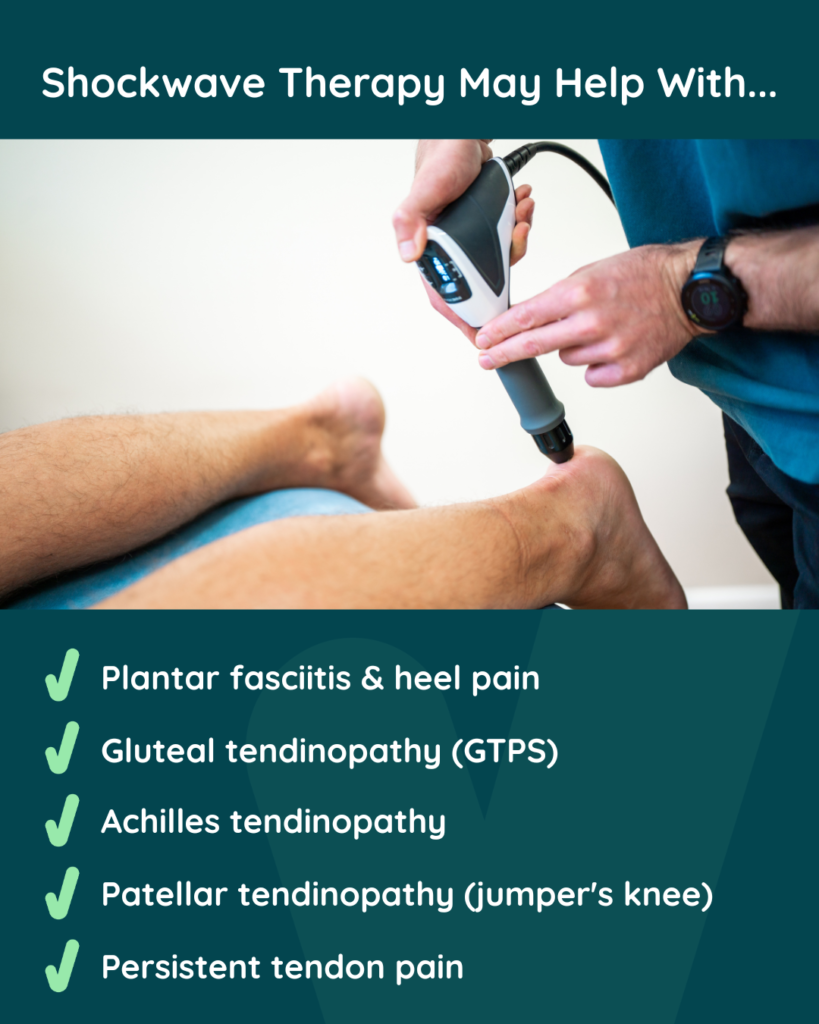
It may be used for conditions such as:
- Plantar fasciitis and ongoing heel pain
- Achilles tendinopathy
- Patellar tendinopathy, sometimes called (jumper’s knee)
- Proximal hamstring tendinopathy
- Gluteal tendinopathy and greater trochanteric pain syndrome (GTPS)
- Your physiotherapist will assess you before treatment to make sure shockwave therapy is clinically appropriate for your condition.
What Conditions Can Shockwave Therapy Help With?
- Persistent tendon pain
- Localised tenderness around a tendon
- Pain during exercise or physical activity
- Discomfort that keeps returning
- Pain affecting walking, work or sport
- Symptoms that have not improved with previous treatment
Not every type of tendon pain is suitable for shockwave therapy. A clinical assessment will help identify the likely cause of your symptoms and the most appropriate treatment plan.
What Happens During a Shockwave Therapy Appointment?
Your first appointment will include an assessment with a trained physiotherapist. They will discuss your symptoms, review your condition and explain the potential benefits and risks before treatment begins.
The shockwave device is placed against the skin using treatment gel. Mechanical sound waves are then delivered to the affected area. Some discomfort during treatment is normal, but the settings can be adjusted to help make the procedure more comfortable. Discomfort usually stops when the session ends.
What Are the Benefits of Shockwave Therapy?
Shockwave therapy may help people experiencing:
Persistent tendon pain
Shockwave therapy can support the body’s healing response when a tendon remains painful or irritated despite other treatment.
Plantar fasciitis and heel pain
For suitable patients, shockwave therapy may be considered when persistent heel pain has not improved with physiotherapy, rest or other conservative approaches.
Pain affecting activity
Treatment may help reduce pain and support a gradual return to walking, exercise, sport or everyday activities.
Symptoms that have not improved with initial treatment
Shockwave therapy provides a non-surgical treatment option for certain soft tissue conditions when previous management has not provided enough improvement. Individual responses vary.
How Many Sessions Will I Need?
Treatment usually involves a course of at least 4 sessions, with each appointment scheduled one to two weeks apart.
Some people notice pain relief after individual sessions, although the full benefit is most likely to be seen after completing at least 4 treatments and could take up to 3 months after this to see the full benefit.
It is important that you can attend the complete treatment course. If appointments are spaced more than two weeks apart, the treatment may be less effective, and the course may need to be rearranged.
What Does Treatment Involve?
Your care may include:
- Physiotherapy assessment
- Shockwave therapy applied to the affected area
- Adjustment of the treatment intensity to support your comfort
- Advice about activity following treatment
- Exercise and rehabilitation guidance
- Monitoring of your symptoms and treatment outcome
Your physiotherapist will monitor your symptoms and progress throughout the treatment course, adjusting advice where appropriate so your rehabilitation plan continues to match your needs and goals.
What Happens After Shockwave Therapy?
You can usually return to normal daily activities and work immediately after your appointment.
For the following 48 hours, you should avoid:
- Heavy exercise
- High-impact activity
- Movements that cause pain in the treated area
You may notice temporary redness, swelling, bruising, numbness or discomfort around the treated area. These effects should settle within a week.
If you experience a sudden increase in pain or loss of movement, contact your GP or NHS 111 for medical advice.
Who Should Not Have Shockwave Therapy?
Shockwave therapy is not suitable for everyone. It may not be appropriate if you:
- Are pregnant
- Are under 18
- Have a hip or knee replacement in the area requiring treatment
- Take certain medicines that affect blood clotting
- Have a blood-clotting disorder
- Have a pacemaker or similar implanted device
- Have poor circulation in the treatment area
- Have an infection or wound in the treatment area
- Have cancer in or close to the treatment area
- Have bone cancer
- Have a history of tendon or ligament rupture in the area
- Have received a steroid injection in the same area within the previous 12 weeks
- Are allergic to the gel used during treatment
Your clinician will review your health, medication and treatment history before recommending shockwave therapy. Do not stop or change prescribed medication unless advised by the appropriate healthcare professional.
What Results Can I Expect?
Our aim is to help you:
- Reduce persistent pain
- Support tissue recovery
- Move more comfortably
- Return gradually to activity
- Improve confidence in using the affected area
- Follow a clear, personalised rehabilitation plan
Results vary between individuals, and shockwave therapy cannot guarantee that symptoms will resolve. Your progress will be monitored before and after treatment so that your care can be adjusted where appropriate.
How Much Does Shockwave Therapy Cost in Ipswich & Bury St Edmunds
Initial assessment and treatment: £60
Follow-up treatment session: £45
Ready to book?
If persistent tendon or soft tissue pain is limiting your movement, exercise or daily activities, we are here to help.
Book an assessment today or get in touch to discuss whether shockwave therapy could be suitable for you.