

Shockwave Therapy: How It Can Help You Recover from Persistent Pain
Shockwave Therapy: How It Can Help You Recover from Persistent Pain
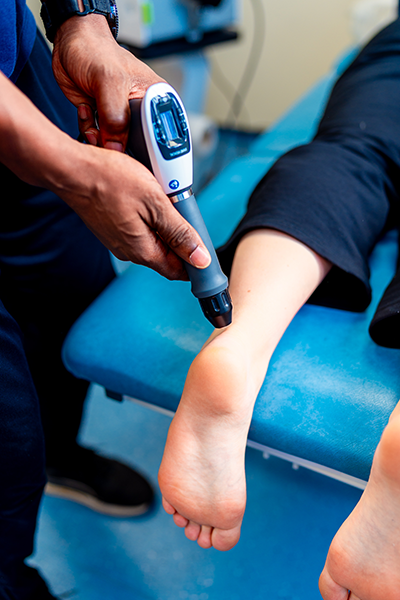
If you’re struggling with a long-standing tendon injury, shockwave therapy may help reduce pain and support your recovery. It is a non-invasive treatment that uses acoustic sound waves to stimulate the body’s natural healing processes.
Who Can Benefit from Shockwave Therapy?
Shockwave therapy is commonly used for lower-limb tendon conditions such as:
- Plantar fasciitis (heel pain)
- Achilles tendinopathy
- Patellar tendinopathy (jumper’s knee)
- Gluteal tendinopathy
It is often recommended when symptoms have persisted for several months and have not fully responded to other treatments.
What Are the Benefits?
Shockwave therapy can:
- Help reduce pain
- Stimulate blood flow and tissue healing
- Support the body’s natural recovery process
- Provide a non-surgical treatment option with minimal downtime
Many patients find it helps them return to work, exercise, and daily activities more comfortably.
How Long Does Treatment Take?
Treatment sessions are quick, typically lasting between 5 and 10 minutes. Most people receive a course of three sessions, usually one to two weeks apart, although this may vary depending on the condition being treated.
Why Combine Shockwave Therapy with Physiotherapy?
Shockwave therapy is often most effective when combined with physiotherapy. While shockwave therapy helps stimulate healing and reduce pain, physiotherapy addresses the underlying factors that may have contributed to the injury, such as weakness, reduced mobility, or movement patterns.
By combining both treatments, patients can not only improve symptoms but also build strength and reduce the likelihood of future injury.
Final Thoughts
Shockwave therapy is a safe and effective treatment option for many persistent tendon conditions. When used alongside a tailored physiotherapy programme, it can play an important role in helping you recover, move better, and return to the activities you enjoy.
Author: Adam Dolling, Senior Physiotherapist. HCPC Registered PH142971
Disclaimer: The information provided is for general guidance only and is not a substitute for individual assessment or clinical advice. Please consult a qualified health professional for personalised care.