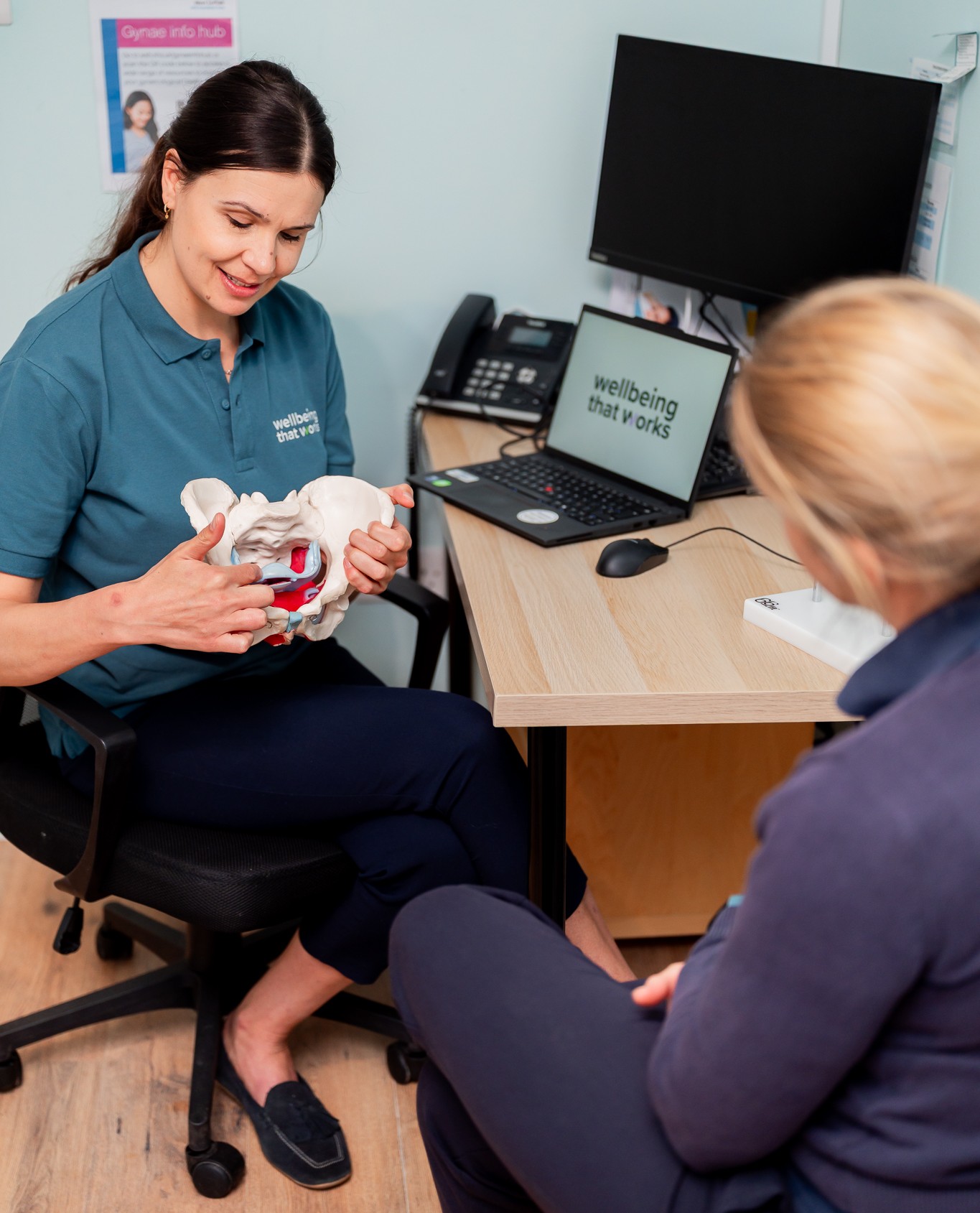
You get your 6–8 week check after having a baby… and then you’re sort of sent on your way.

For some people that’s fine. But a lot of women leave thinking,
“I’ve been told I’m okay… but it doesn’t really feel like I am.”

That might be:

  • leaking a bit when you cough or run
  • feeling heavy or “not quite right” down below
  • your tummy feeling weak or different
  • back, hip or pelvic pain
  • or just not feeling confident getting back into exercise

That’s usually when people end up booking a Mummy MOT.

What it actually is (in simple terms)

It’s just a proper check of how your body has recovered after pregnancy and birth.

We look at:

  • your pelvic floor
  • your tummy muscles
  • how you’re breathing
  • how everything is working together

Because it’s rarely just one thing.

Why people find it helpful

A lot of women have been told to “do your pelvic floor exercises”, but no one has actually checked if:

  • you’re doing them correctly
  • you need strengthening… or need to relax more
  • your core is working with your pelvic floor

And that’s usually the missing piece.

It’s not just for when something’s wrong

You don’t have to be leaking or in pain.

Some people come because:

  • they want to get back to running or the gym
  • they want to feel stronger again
  • they just want reassurance that everything is okay

It’s as much about confidence as anything else.

Timing

You can come from around 6 weeks postnatal…
but honestly, it’s never too late.

We see people months, even years after having a baby who say,
“I wish I’d done this sooner.”

What happens in the session

It’s very relaxed.

We chat through what’s been going on, what you want to get back to, and then look at how your body is working.

If you’re happy to, we can also do an internal pelvic floor assessment, but that’s always your choice.

You’ll leave with a plan tailored to you and your individual goals (not just “do 10 squeezes”).

The main thing I say to people

If something doesn’t feel right, it’s worth getting it checked.

A lot of postnatal symptoms are really common, but they’re also very treatable once you know what’s going on.

Get in touch to find out how our pelvic health team can support you.

Author: Adam Dolling, Senior Physiotherapist. HCPC Registered PH142971

Disclaimer: The information provided is for general guidance only and is not a substitute for individual assessment or clinical advice. Please consult a qualified health professional for personalised care.